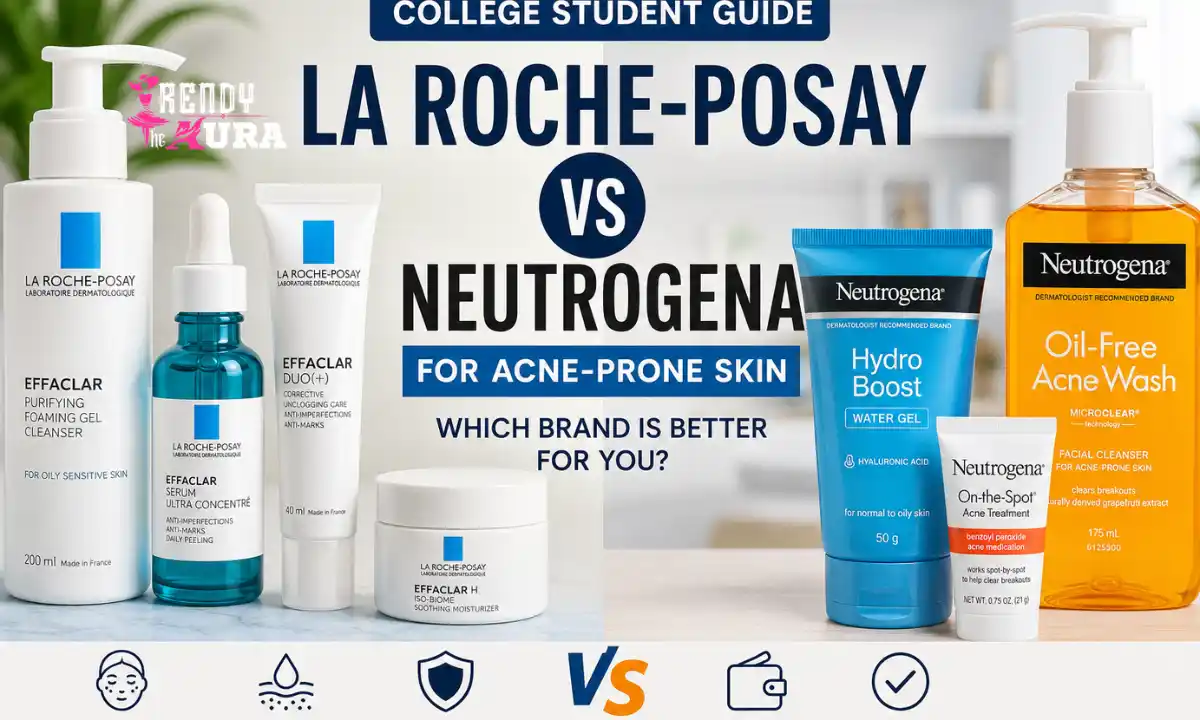

If you are thinking, “I am a college student. Are La Roche-Posay products better for acne-prone skin than Neutrogena?”, you are asking a question that thousands of students search for every month. Acne is one of the most common skin concerns during college years. Long study hours, stress before exams, lack of sleep, unhealthy snacks, and changing hormones can all lead to unexpected breakouts. Many students spend money on skincare products without knowing which brand actually fits their skin type. Choosing the wrong product can leave your skin feeling dry, irritated, or even more prone to acne.
The good news is that both La Roche-Posay and Neutrogena have built strong reputations for treating acne-prone skin. However, they are not designed in exactly the same way. La Roche-Posay focuses heavily on protecting the skin barrier while treating acne gently, making it a popular choice for people with sensitive skin. Neutrogena is well known for offering affordable acne products that are easy to find in stores and often contain stronger acne-fighting ingredients. The better choice depends on your skin type, budget, and how your skin reacts to active ingredients.
As a college student, your skincare routine should be simple, affordable, and easy to follow. You probably do not have the time or money for a ten-step skincare routine every day. What you need are products that work consistently without making your skin worse. Throughout this guide, you will learn the differences between these two popular skincare brands, understand which ingredients are best for acne-prone skin, discover which products provide the best value, and find out how to build a routine that fits your student lifestyle.
Many dermatologists agree that healthy skin is not about using the most expensive products—it is about using the right products consistently. That is why this comparison looks beyond brand names and focuses on what really matters: ingredients, effectiveness, skin sensitivity, affordability, and long-term skin health.
Understanding Acne-Prone Skin Before Choosing a Skincare Brand
Acne-prone skin is more than just getting a few pimples now and then. It is a skin condition where pores become blocked with excess oil, dead skin cells, and bacteria. This can lead to blackheads, whiteheads, painful pimples, and sometimes even deep cystic acne. For college students, acne often becomes worse because of stress, irregular sleep, unhealthy eating habits, and spending long hours outdoors or in classrooms. Hormonal changes during the late teenage years and early twenties also play a major role. Before deciding whether La Roche-Posay products are better for acne-prone skin than Neutrogena, it is important to understand what your skin actually needs. Every person’s skin is different, so a product that works well for a friend may not work the same for you.
Another important thing to know is that acne treatment is not only about removing pimples. The best skincare products also protect your skin barrier, reduce redness, control oil, and prevent future breakouts. Dermatologists often recommend looking for ingredients like salicylic acid, benzoyl peroxide, niacinamide, ceramides, and hyaluronic acid because they each solve a different part of the acne problem. At the same time, you should avoid harsh products that contain too much alcohol or heavy fragrances, especially if your skin is sensitive. Understanding these basics makes it much easier to compare La Roche-Posay and Neutrogena and choose products that match your skin type instead of simply buying the most popular brand.
| Cause | How It Affects Your Skin |
|---|---|
| Stress | Increases oil production and inflammation |
| Lack of Sleep | Slows skin repair and healing |
| Hormonal Changes | Triggers excess sebum production |
| Poor Diet | High-sugar foods may worsen breakouts in some people |
| Sweating | Can clog pores if skin is not cleansed properly |
| Heavy Makeup | May block pores when not removed completely |
| Dirty Pillowcases | Transfer oil and bacteria back onto the skin |
Signs That You Have Acne-Prone Skin
- Pimples appear regularly, not occasionally.
- Your skin becomes oily within a few hours.
- Blackheads and whiteheads are common.
- New breakouts appear before old ones heal.
- Your pores look larger, especially around the nose.
- Acne marks remain after pimples disappear.
| Ingredient | Main Benefit |
|---|---|
| Salicylic Acid | Unclogs pores and removes excess oil |
| Benzoyl Peroxide | Kills acne-causing bacteria |
| Niacinamide | Reduces redness and controls oil |
| Ceramides | Repairs and strengthens the skin barrier |
| Hyaluronic Acid | Keeps skin hydrated without feeling greasy |
| Zinc | Helps reduce inflammation and oil production |
Ingredients That May Irritate Sensitive Acne-Prone Skin
- High amounts of alcohol
- Strong artificial fragrance
- Harsh physical scrubs
- Heavy pore-clogging oils
- Overuse of exfoliating acids
Case Study
Sarah, a 20-year-old college student, struggled with acne during her first year at university. She used several strong face washes every day because she believed they would clear her skin faster. Instead, her face became dry, red, and even more oily because her skin barrier was damaged. After switching to a gentle cleanser with ceramides, using a lightweight moisturizer, and applying sunscreen daily, her skin gradually improved over the next three months. Her experience shows that treating acne is not only about removing oil—it is also about protecting your skin.
Interesting Facts
- Nearly 85% of people experience acne at some point between the ages of 12 and 24.
- Stress hormones can increase oil production, leading to more breakouts during exams.
- Overwashing your face can actually make acne worse by irritating the skin.
- Sunscreen is an important part of acne treatment because UV rays can darken acne marks.
- Hydrated skin often heals acne faster than dry, irritated skin.
Skincare Quote:
“Healthy skin begins with a healthy skin barrier. Treat acne gently, and your skin will often respond better over time.”
La Roche-Posay vs Neutrogena – Which Brand Is Better for Acne-Prone Skin?
Choosing between La Roche-Posay and Neutrogena for acne-prone skin can feel confusing because both brands are trusted by dermatologists and millions of users worldwide. However, they are designed with slightly different goals in mind. La Roche-Posay focuses on gentle skincare that supports the skin barrier while treating acne. Many of its products include soothing ingredients such as thermal spring water, ceramides, and niacinamide, making them especially suitable for people whose skin becomes dry or irritated easily. Although the products usually cost more, many users feel the extra investment is worthwhile because they experience fewer side effects and better long-term skin health.
Neutrogena, on the other hand, is known for offering affordable acne treatments that are easy to find in supermarkets and pharmacies. Many of its cleansers and spot treatments contain salicylic acid or benzoyl peroxide, ingredients that are highly effective at fighting acne-causing bacteria and unclogging pores. For students on a tight budget, Neutrogena provides excellent value and often delivers faster results for oily skin. However, some stronger formulas may feel drying if used too often, especially for people with sensitive skin. The better brand is not necessarily the more expensive one—it is the one that matches your skin type, acne severity, and daily routine.
| Feature | La Roche-Posay | Neutrogena |
|---|---|---|
| Best For | Sensitive and acne-prone skin | Oily and acne-prone skin |
| Price | Higher | More affordable |
| Skin Barrier Support | Excellent | Good |
| Acne Ingredients | Niacinamide, Salicylic Acid, Ceramides | Salicylic Acid, Benzoyl Peroxide |
| Suitable for Daily Use | Yes | Yes, but some products are stronger |
| Dermatologist Popularity | Very High | High |
What Makes La Roche-Posay Stand Out?
- Gentle formulas for sensitive skin.
- Excellent barrier-repair ingredients.
- Mostly fragrance-free products.
- Lightweight moisturizers that do not clog pores.
- Dermatologist-tested formulas.
Why Many Students Choose Neutrogena
- Lower prices.
- Widely available.
- Effective acne-fighting cleansers.
- Strong oil-control products.
- Easy starter skincare routine.
Case Study
Ahmed, a 19-year-old engineering student, had very oily skin and frequent blackheads. He started with a Neutrogena salicylic acid cleanser because it fit his budget and controlled his oil well. After several months, he noticed some dryness during winter, so he added a gentle moisturizer. His acne improved significantly. His experience shows that affordable products can work very well when used correctly.
Key Differences
- La Roche-Posay focuses on balancing and repairing the skin while treating acne.
- Neutrogena focuses on actively removing oil and fighting breakouts.
- Sensitive skin usually benefits more from La Roche-Posay.
- Very oily skin often responds well to Neutrogena.
- Budget-conscious students may find Neutrogena easier to maintain.
Expert Quote:
“The best skincare brand is not the one with the highest price—it is the one that matches your skin’s unique needs.”
Best La Roche-Posay and Neutrogena Products for College Students With Acne
Finding the right skincare products can save both money and frustration, especially when you are a college student managing classes, assignments, and a limited budget. Instead of buying every trending product online, it is better to build a simple routine using products that have proven ingredients for acne-prone skin. Both La Roche-Posay and Neutrogena offer cleansers, moisturizers, sunscreens, and spot treatments that work well, but the right choice depends on your skin type and how sensitive your skin is to active ingredients.
For most students, a routine with a gentle cleanser, a lightweight moisturizer, and a non-comedogenic sunscreen is enough to keep the skin healthy. If you have active acne, adding a treatment with salicylic acid or benzoyl peroxide can help reduce breakouts. Remember that using too many acne products at the same time can irritate your skin and slow down the healing process. A simple and consistent routine almost always works better than a complicated one.
| Category | La Roche-Posay | Neutrogena |
|---|---|---|
| Cleanser | Gentle acne cleanser | Oil-free acne wash |
| Moisturizer | Barrier-repair moisturizer | Hydro Boost Gel Cream |
| Sunscreen | Oil-free SPF sunscreen | Clear Face Sunscreen |
| Spot Treatment | Salicylic acid treatment | Benzoyl peroxide treatment |
Tips Before Buying
- Match products to your skin type.
- Introduce one new product at a time.
- Give products at least 6–8 weeks to show results.
- Always wear sunscreen during the day.
- Moisturize even if your skin is oily.
Pros, Cons, and Real-Life Buying Factors
Every skincare brand has strengths and weaknesses, so comparing only the price or popularity does not give the full picture. La Roche-Posay is often praised for its gentle formulas that protect the skin barrier while treating acne. Many people with sensitive skin notice less irritation after switching to this brand. However, the higher price can be difficult for students who have limited monthly budgets. If your skin reacts easily to strong acne treatments, investing in gentle skincare may actually save money because you are less likely to buy extra products to calm irritation.
Neutrogena remains one of the most popular skincare brands because it combines effectiveness with affordability. Many students appreciate that they can build a complete acne routine without spending a lot. The downside is that some formulas contain stronger active ingredients, which may cause dryness if they are overused. The key is to use them correctly and always follow with a moisturizer.
Pros of La Roche-Posay
- Gentle on sensitive skin.
- Excellent barrier protection.
- High-quality ingredients.
- Dermatologist recommended.
Pros of Neutrogena
- Budget friendly.
- Easy to find.
- Effective for oily skin.
- Great beginner option.
How to Build the Best Acne Skincare Routine as a College Student
A skincare routine does not need ten different products to be effective. Most dermatologists recommend keeping things simple because using too many treatments at once can irritate the skin. College life is already busy, so having a routine that takes only a few minutes each morning and evening makes it much easier to stay consistent. Consistency is often the biggest factor in achieving clearer skin.
The ideal morning routine includes washing your face with a gentle cleanser, applying a lightweight moisturizer, and finishing with sunscreen. At night, cleanse your face again, apply an acne treatment if needed, and use moisturizer to support your skin barrier. Along with skincare, healthy habits such as drinking enough water, sleeping seven to eight hours, reducing stress, and changing pillowcases regularly can make a noticeable difference in your skin.
Simple Daily Routine
Morning
- Gentle cleanser
- Moisturizer
- Sunscreen
Night
- Gentle cleanser
- Acne treatment
- Moisturizer
Healthy Habits
- Drink enough water.
- Eat more fruits and vegetables.
- Sleep well.
- Avoid touching your face.
- Wash makeup brushes regularly.
Frequently Asked Questions
1. Is La Roche-Posay better than Neutrogena for acne-prone skin? (About 100 words)
La Roche-Posay is often considered better for people with sensitive acne-prone skin because its products focus on treating acne while protecting the skin barrier. Ingredients like ceramides and niacinamide help reduce irritation and redness. Neutrogena is also very effective, especially for oily skin and mild to moderate acne, thanks to ingredients like salicylic acid and benzoyl peroxide. The better choice depends on your skin type, acne severity, and budget. If your skin becomes dry easily, La Roche-Posay may be the better option. If you need affordable acne care, Neutrogena offers excellent value.
2. Is Neutrogena good for college students with acne? (About 100 words)
Yes. Neutrogena is a popular choice among college students because it offers affordable skincare products that effectively treat acne. Many of its cleansers and spot treatments contain dermatologist-recommended ingredients that reduce oil and help prevent clogged pores. Students who have oily skin often see positive results when using Neutrogena consistently. However, some stronger products may cause dryness, so adding a moisturizer is important. If you are starting your skincare journey and have a limited budget, Neutrogena is an excellent brand to consider while maintaining a simple and consistent daily routine.
3. Can I use La Roche-Posay and Neutrogena together? (About 100 words)
Yes. Many people successfully combine products from both brands. For example, you might use a La Roche-Posay moisturizer because it is gentle and pair it with a Neutrogena acne cleanser to control excess oil. The most important thing is to avoid using too many strong active ingredients at the same time. Introduce one new product gradually and monitor how your skin reacts. Combining products can be an effective way to get the benefits of both brands while creating a routine that suits your specific skin concerns and budget.
4. How long does it take to see results from acne products? (About 100 words)
Most acne treatments require patience. While some people notice improvements within two to four weeks, dermatologists often recommend using products consistently for at least six to eight weeks before judging the results. Acne develops over time, so it also takes time to improve. Switching products too quickly may prevent you from seeing their full benefits. Consistency, gentle cleansing, moisturizing, and wearing sunscreen every day all help improve results. If your acne becomes severe or painful, consulting a dermatologist is the best option.
5. Which brand offers better value for students? (About 100 words)
If affordability is your main concern, Neutrogena generally offers better value because its products are less expensive and widely available. Students can build a complete acne routine without spending a large amount of money. However, if you have sensitive skin that reacts to stronger treatments, La Roche-Posay may provide better long-term value because its gentle formulas reduce irritation and support the skin barrier. Spending slightly more on products that suit your skin can sometimes prevent additional skincare costs later. The best value comes from choosing products that consistently work for your individual skin type.
Final Verdict – Should College Students Choose La Roche-Posay or Neutrogena?
Choosing between La Roche-Posay and Neutrogena for acne-prone skin comes down to your skin type, budget, and personal skincare goals. If your skin is sensitive, easily irritated, or often feels dry after using acne treatments, La Roche-Posay is likely the better choice because it balances acne treatment with skin barrier protection. If your skin is very oily and you need effective acne care at a lower price, Neutrogena remains one of the best options available. Neither brand is universally better; each has strengths that suit different people.
For most college students, the smartest approach is to keep your routine simple, stay consistent, and choose products based on ingredients rather than brand name alone. Clear skin takes time, and no product works overnight. With patience, healthy lifestyle habits, and the right skincare routine, both La Roche-Posay and Neutrogena can help you manage acne successfully and maintain healthier skin throughout your college years.
Read more:Crypto30x.com AC Milan Explained: Truth, Facts & Latest Insights 2026