
Technology has become part of almost everything we do. People use artificial intelligence to write, study, search for information, analyze data, communicate, create images, and complete everyday work. Machines can now finish some tasks in seconds that once required hours of human effort.
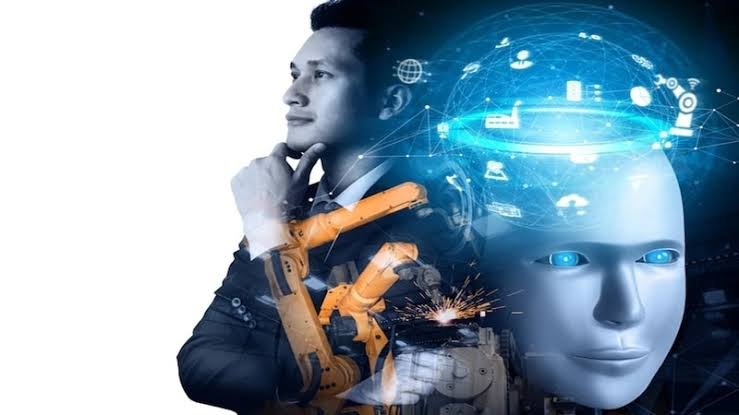
That progress naturally raises a bigger question: could technology eventually make humans unnecessary? The idea behind why technology cannot replace humans RoarTechMental offers a more balanced way to look at this question. Technology can improve human abilities, but performing a task is not the same thing as being human.
A machine can process millions of pieces of information without becoming tired. However, people bring personal experience, emotion, responsibility, imagination, values, and relationships into their decisions. These qualities become especially important when a situation does not have one simple or mathematically correct answer.
The future, therefore, does not have to become a competition between people and machines. A more useful approach is to understand what technology does well, recognize where it falls short, and use it to support human ability rather than blindly trying to replace it.
What Does Why Technology Cannot Replace Humans RoarTechMental Mean?
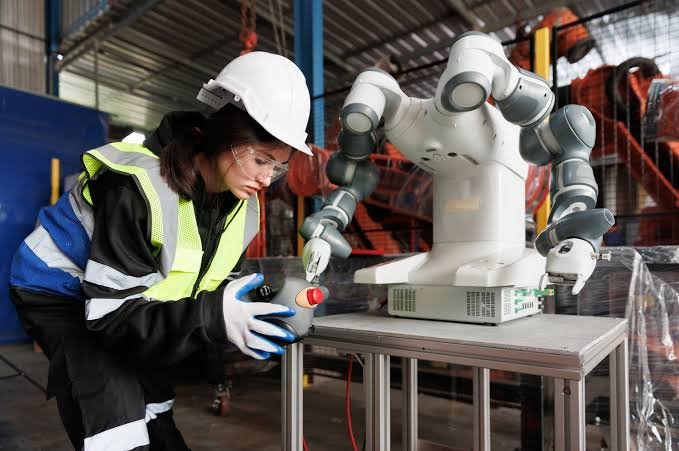
The idea behind why technology cannot replace humans RoarTechMental is not that technology has little value. In fact, modern technology is extremely useful because it can automate repeated work, organize huge amounts of information, identify patterns, and help people make faster decisions. The important difference is that technology normally works within systems, data, instructions, and goals created or selected by people. A person can also look beyond the immediate task and think about another person’s feelings, unusual circumstances, possible consequences, and whether a technically correct decision is actually the right decision.
This becomes clearer in areas such as education, healthcare, leadership, customer service, creative work, and mental health support. An AI system may provide information or suggest possible answers, but a skilled person can understand details that are difficult to reduce to data. A teacher may notice that a normally active student has suddenly become quiet. A manager may understand why an employee needs encouragement rather than criticism. Similarly, a counselor can respond to changes in tone, hesitation, personal history, and emotional context. Technology can assist these people, but assistance and replacement are very different things.
Humans and Technology
| Area | Technology | Humans |
|---|---|---|
| Data processing | Very fast | More limited |
| Repetitive tasks | Highly effective | Can become tiring |
| Emotional understanding | Can recognize patterns | Can experience and interpret emotions |
| Personal experience | Does not live a human life | Learns through lived experience |
| Moral responsibility | Requires human-made frameworks | Can accept responsibility |
| Relationships | Can simulate conversation | Can build genuine social relationships |
Technology as a Tool, Not a Human Replacement
One useful way to understand modern AI is to think of it as an amplifier of human ability. A calculator did not remove the need for mathematicians, and search engines did not remove the need for researchers. In a similar way, AI can help writers organize ideas, doctors examine information, businesses analyze patterns, and students explore difficult subjects. The technology may change how the work happens, but people still decide what they are trying to achieve and whether the result makes sense.
This distinction will become even more important as AI improves. The strongest future may not belong to humans who refuse technology or machines that operate without people. Instead, it may belong to people who understand how to combine human judgment, creativity, empathy, and responsibility with the speed and processing power of technology. That combination allows machines to handle suitable tasks while humans remain involved where context, trust, values, and real human understanding matter most.
Key idea: Technology does not need to become human to be useful. Its greatest value may come from helping people do things they could not do as quickly or effectively on their own.
Human Empathy and Emotional Intelligence Cannot Be Replicated
One of the biggest differences between humans and technology is the way people experience emotions. AI can recognize words connected with happiness, sadness, anger, or fear and generate a suitable response. However, recognizing an emotional pattern is different from actually experiencing concern for another person. Humans connect feelings with memories, relationships, culture, personal experiences, and the situation happening around them. This is why the same sentence can mean completely different things depending on who says it, how it is said, and what happened before the conversation.
Human connection becomes especially important in teaching, healthcare, counseling, parenting, management, and other situations built around trust. A therapist, for example, does more than provide information. The professional listens, notices changes in behavior, understands personal history, and adjusts the conversation as it develops. Technology can support such work through scheduling, information management, or other carefully designed tools, but people should remain involved when emotional understanding and important decisions are required.
Human Emotional Skills vs AI
| Human Ability | What Technology Can Do | What Humans Add |
|---|---|---|
| Empathy | Generate empathetic language | Experience concern and connection |
| Listening | Process spoken or written words | Understand personal and social context |
| Trust | Provide consistent responses | Develop relationships over time |
| Body language | Detect certain patterns | Interpret them within a wider situation |
| Emotional support | Offer general responses | Adapt support to a real person |
Interesting fact: People communicate through much more than words. Facial expressions, pauses, eye contact, posture, voice, previous experiences, and cultural expectations can all affect meaning. Technology can analyze some of these signals, but combining them with a person’s history and changing circumstances remains a difficult challenge.

Human Creativity and Imagination Go Beyond Technology
Generative AI has made the question of creativity more complicated. Modern systems can produce images, music, text, designs, and ideas at impressive speed. Yet human creativity often begins with something deeper than producing an attractive output. A writer may turn childhood memories into a story, an artist may respond to an important event, and an inventor may notice a problem because they have personally experienced it. People give creative work intentions and meanings that come from living in the world.
AI can still become a powerful creative partner. A designer might use it to explore early concepts, while a writer may use technology to organize research or compare possible approaches. The important point is not that machines cannot generate novel-looking material. It is that humans decide why something deserves to be created, what it should communicate, and whether it has value in a particular cultural or personal context. In this sense, technology can expand the creative toolbox without making human imagination irrelevant.
Interesting fact: Many important inventions came from combining existing ideas in unexpected ways. Humans do this not only through knowledge but also through curiosity, frustration, accidents, needs, and personal experience. The desire to solve a problem often matters as much as the ability to calculate a solution.
Critical Thinking, Ethics, and Human Judgment
Technology performs best when a problem has enough information and reasonably clear rules. Real life is often less organized. A doctor, teacher, judge, manager, engineer, or business owner may face a situation where several choices appear reasonable but each choice affects people differently. Humans can consider values, intentions, consequences, social expectations, exceptions, and responsibilities before reaching a decision. AI can provide information that supports the decision, but giving a machine an answer-generating ability does not automatically give it moral responsibility.
AI systems can also produce incorrect information or inherit problems from the information and processes used to develop them. Generative systems may sometimes produce convincing statements that are inaccurate, often described as hallucinations. This makes verification and human oversight important, particularly in areas where mistakes can seriously affect someone’s health, finances, education, employment, or rights. A confident answer is not necessarily a correct answer, whether it comes from a person or a machine.
Why Human Judgment Still Matters
People can ask questions that go beyond “Can we do this?” They can also ask “Should we do this?” A company may technically have enough customer information to create an extremely detailed prediction system, for example, but humans still need to consider privacy, fairness, consent, security, and possible harm.
That ability to question the goal itself is important. Technology normally works toward objectives established through human choices. Humans therefore remain responsible for deciding which problems deserve attention, which limits should exist, and when an automated recommendation should be challenged.
Interesting fact: AI can produce different answers when a question is reworded or when different context is supplied. This is one reason important AI-generated information should be checked rather than accepted simply because the response sounds professional.
Why Technology Cannot Completely Replace Humans at Work
AI and automation will almost certainly continue changing employment, but changing jobs is not the same as removing the need for people. Many occupations contain several different tasks. Technology might automate the repetitive parts while leaving negotiation, leadership, problem-solving, communication, physical adaptability, relationship building, and accountability to people. An accountant, for example, can use software to process information faster and then spend more time interpreting results and advising clients.
This means workers may increasingly need to learn how to work with technology rather than against it. Skills such as communication, critical thinking, creativity, adaptability, digital literacy, leadership, and responsible AI use can become more valuable when routine activities are automated. Some occupations may shrink, others may change, and entirely new roles may appear. Technology has caused similar shifts before, although modern AI could make some changes happen faster and across a wider range of knowledge-based jobs.
Jobs Where Human Skills Remain Especially Important
Human involvement remains valuable in work that depends heavily on relationships, responsibility, unpredictable environments, or difficult judgment. Teachers need to motivate different students. Nurses and doctors communicate with patients and families. Managers resolve conflicts. Skilled tradespeople respond to unexpected physical conditions. Leaders must earn trust and accept responsibility for their choices.
Even when AI enters these professions, it does not necessarily become the profession itself. A doctor using an AI-assisted system is still responsible for understanding the patient. A teacher using educational software still needs to manage a classroom. The tool may change, while the human purpose behind the work remains.
Interesting fact: Technology often automates individual tasks rather than entire occupations. This distinction matters because most real jobs combine routine work with responsibilities that require different kinds of human ability.
Limitations and Risks of Relying Too Much on Technology
Convenience can make people trust technology more than they should. AI systems depend on data, computing infrastructure, software, electricity, security, and human-designed processes. They can encounter technical failures, outdated information, misleading inputs, cyberattacks, biased data, or situations their designers did not expect. People therefore need to understand when automation is useful and when its output requires careful checking. Blind trust can turn a useful tool into a source of avoidable mistakes.
Privacy creates another challenge. Digital services may handle personal conversations, location information, work documents, financial details, or other sensitive data depending on how they are designed and used. Users should understand what information they are sharing and organizations should establish appropriate safeguards. Access is another concern because advanced technology is not distributed equally around the world. Cost, internet availability, language support, disability access, infrastructure, and digital skills can determine who benefits from new tools.
The Danger of Automation Bias
People can sometimes trust a computerized recommendation simply because it came from a system. This tendency is commonly discussed as automation bias. It becomes dangerous when a person stops checking whether the recommendation fits the actual situation.
Technology should therefore make human decision-making stronger, not passive. Good systems should allow people to question results, understand important limitations, correct mistakes, and take control when circumstances require it.
Interesting fact: Faster decision-making is not always better decision-making. In complicated situations, taking additional time to verify information or understand another person’s circumstances can prevent a much larger problem later.
The Future Is Human and Technology Working Together
The future of technology does not need to be described as humans versus machines. A more practical model is humans working with machines. Computers are excellent at performing calculations, processing large datasets, searching patterns, and repeating defined processes quickly. Humans bring goals, values, lived experience, relationships, contextual understanding, and responsibility. Combining these strengths can produce better results than expecting either side to perform every part of a complicated task.
This is ultimately the strongest lesson behind why technology cannot replace humans RoarTechMental. Technology will continue to become more capable, and some activities currently performed by people will undoubtedly become automated. Yet increased capability does not automatically create human experience, social responsibility, or genuine relationships. The more powerful technology becomes, the more important thoughtful human oversight may become as well.
Human Plus AI May Be More Powerful Than Human vs AI
Imagine a doctor who can quickly review relevant medical information with digital assistance but still personally evaluates the patient. Think of a teacher who uses software to identify where students struggle and then decides how to explain the lesson differently. Consider a designer who generates several early concepts quickly but uses personal judgment to develop the final work.
In each example, technology removes friction rather than human purpose. The goal should not always be “How can we remove the person?” A better question is often “How can this technology help the person make a better decision or produce better work?”
Interesting fact: Some of the most useful technologies in history did not eliminate human ability; they extended it. Telescopes extended sight, calculators expanded calculation, and computers increased our ability to store and process information. AI can be viewed as another extension when people remain responsible for how it is used.
Final Thoughts
Technology has reached a point where machines can perform tasks that would have seemed impossible only a few decades ago. AI can write, translate, recognize patterns, analyze information, create media, and support decision-making. Future systems will likely become even more capable.
Still, human value cannot be measured only by how quickly someone processes information. People create relationships, experience emotions, develop values, question goals, take responsibility, and give meaning to their work. The central message of why technology cannot replace humans RoarTechMental is therefore not about rejecting innovation. It is about building a future where technology serves people while human judgment remains at the center of important choices.
Frequently Asked Questions
1. Why can technology not completely replace humans?
Technology can automate tasks and process information quickly, but people provide lived experience, judgment, relationships, values, and responsibility. These qualities remain important when situations are uncertain or deeply personal.
2. Can AI replace human intelligence?
AI can outperform people in some narrow tasks, but human intelligence includes social understanding, adaptability, experience, reasoning, and the ability to define meaningful goals. The two forms of capability should not be treated as identical.
3. What human qualities are difficult for AI to replace?
Genuine relationships, lived emotional experience, moral responsibility, contextual judgment, leadership, and deeply personal creativity remain difficult to reproduce through software alone.
4. Will AI replace human jobs?
AI will automate some tasks and may reduce demand for certain roles. At the same time, it can transform existing jobs and create new kinds of work, making adaptation and new skills increasingly important.
5. Is AI a threat or a useful tool?
It can be either, depending on its design and use. Responsible human oversight, appropriate safeguards, verification, and clear accountability can help people gain benefits from AI while reducing its risks.
Read more:Nick Kosir Net Worth in 2026: How the Dancing Weatherman Built His Success